
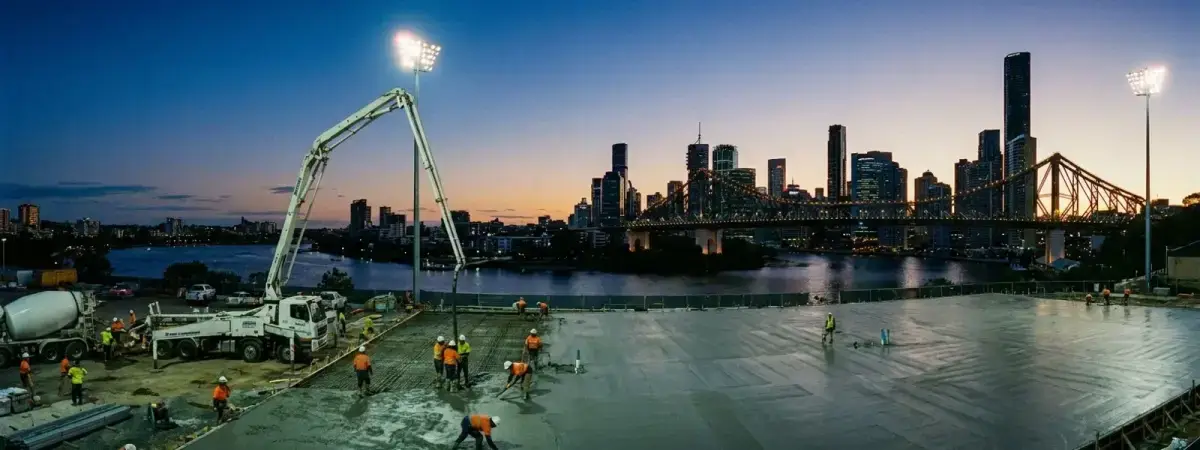
FREQUENTLY ASKED QUESTIONS
New driveways, shed slabs, exposed aggregate, concrete resurfacing and house slabs across Brisbane and Southeast Queensland.
REQUEST A FREE QUOTEMost Frequently Asked Questions About FAQ in Brisbane
Understanding various aspects of concreting projects is essential for homeowners and businesses in Brisbane. This FAQ section provides detailed information on common concerns, addressing topics such as concrete types, installation processes, and maintenance. We cover everything from exposed aggregate finishes, which involve exposing decorative aggregates like pebbles or crushed stone, to the structural integrity of house slabs, which are typically reinforced with steel mesh. We also discuss specific concrete mixes suitable for Brisbane's climate, including those with additives for improved workability and durability. This FAQ serves as a practical guide for your next concreting project.
WE SPECIALISE IN
Intro paragraph goes here.

Concrete driveways in Brisbane are the most widely installed driveway surface across Queensland residential properties. Plain grey, exposed aggregate, coloured, stamped, and stencilled finishes are all available. Correct sub-base preparation, steel mesh reinforcement, and proper curing are essential for long-term performance in Brisbane's subtropical conditions.
Concrete slabs in Brisbane are used for outdoor entertaining areas, garage floors, shed bases, and commercial floor systems across Queensland. Slab thickness, reinforcement specification, and drainage falls are determined by the intended load and site conditions. Waffle pod and raft slab systems are common for residential applications throughout south-east Queensland.
Decorative concrete in Brisbane covers stamped, stencilled, honed, polished, and colour-oxide finishes applied to driveways, outdoor slabs, and commercial floors. Each finish uses the same concrete substrate with different surface treatments applied during or after the pour. Decorative concrete suits Brisbane properties where appearance alongside durability is a requirement.
Exposed aggregate concrete in Brisbane embeds decorative stone or pebble into a concrete mix that is washed before curing to reveal the aggregate surface. River pebble, granite chip, and quartz are the most common aggregate selections. Exposed aggregate provides a naturally textured, slip-resistant surface suited to Queensland's outdoor lifestyle and heavy summer rainfall.
Concrete paths and footpaths in Brisbane serve residential and commercial properties across Queensland. Path thickness is typically 75mm to 100mm depending on the intended use. Broom finish provides traction for outdoor pathways. Control joints are cut at regular intervals to manage shrinkage cracking across path lengths in Brisbane's warm conditions.
Concrete retaining walls in Brisbane are used on sloped residential and commercial sites to manage ground level changes and prevent soil movement. Wall design depends on retained height, soil type, and surcharge loads. Walls above 1.0 metre in height typically require engineering certification under Queensland building standards.
Pool surrounds and coping in Brisbane require concrete mixes and surface finishes that perform in wet conditions and withstand constant exposure to pool chemicals and Queensland UV radiation. Exposed aggregate and spray-on texture finishes provide non-slip surfaces around pools. Concrete coping defines the pool edge and seals the join between the shell and surround.
Commercial concrete flooring in Brisbane covers warehouse floors, factory slabs, carpark surfaces, and retail floor systems across Queensland. Commercial applications require higher MPa strength grades, heavier reinforcement, and tighter tolerances for levelness than residential work. Surface hardeners and sealers protect commercial concrete floors from traffic wear and chemical exposure.
Concrete resurfacing in Brisbane applies a polymer-modified overlay to an existing concrete surface to restore appearance and extend slab life without full removal. Resurfacing is viable where the existing slab is structurally sound. Spray-on texture, exposed aggregate overlay, and stencilled finishes are available options for Brisbane residential and commercial properties.
Shed and garage slabs in Brisbane are typically poured at 100mm thickness with SL72 steel mesh reinforcement. Slab dimensions are set to match the shed or garage footprint with adequate overhang for the building frame. Control joints and drainage falls are incorporated during formwork to prevent cracking and water pooling inside the finished structure.

CONCRETING QUESTIONS ANSWERED FOR BRISBANE HOMEOWNERS AND BUSINESSES
This FAQ section answers common questions regarding concreting services in Brisbane. We cover topics from site preparation to concrete finishes and maintenance. This helps clarify concerns for residents and businesses, aiding informed decisions for projects.
A well-installed concrete driveway in Brisbane lasts 20 to 30 years or more with proper maintenance. Factors like soil conditions, traffic load, and Brisbane's subtropical climate influence durability. Regular sealing and prompt concrete driveway repair contribute to longevity.
For light foot traffic, concrete can be walked on after 24 to 48 hours. However, it requires 7 days before light vehicles can drive on it. Full curing for heavy vehicles takes 28 days to achieve maximum strength in Brisbane's humidity.
Exposed aggregate offers a non-slip surface, enhanced aesthetic appeal, and excellent durability. Its natural stone finish blends well with various architectural styles, making it a popular choice for driveways in Brisbane. It requires minimal maintenance.
Yes, often you do. For new driveways or significant alterations, Brisbane City Council approval is generally required, particularly for crossovers onto public land. This ensures compliance with local regulations regarding drainage and public safety. Specific forms are available on the council website for these applications.
Stamped concrete involves pressing patterns into wet concrete to mimic natural materials like stone or brick. Coloured concrete involves adding pigments to the mix or applying surface colours to achieve a desired hue. Both are decorative options for Brisbane properties.

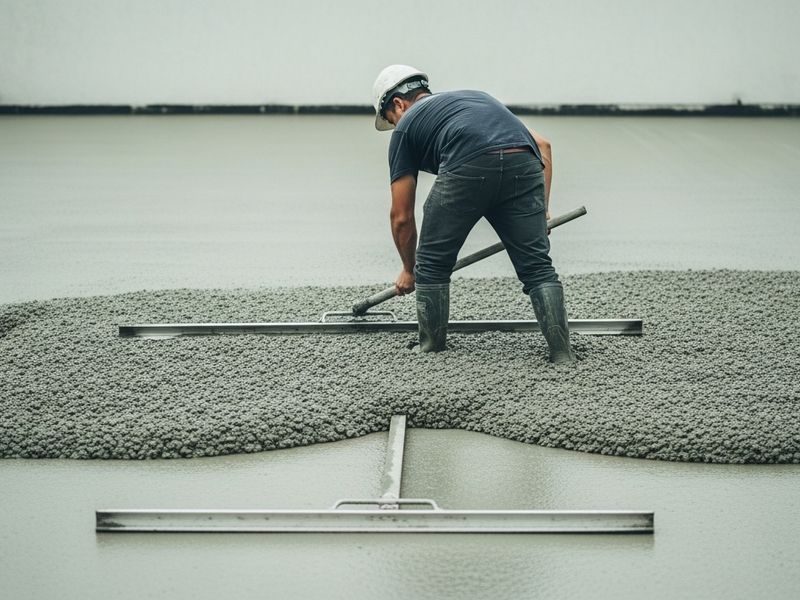
Proper slab preparation, correct concrete mix, and adequate control joints are crucial. Control joints guide where cracks occur naturally due to expansion and contraction, making them less noticeable. Proper curing also helps prevent early cracking, especially in Brisbane's climate. This faq details crack prevention methods.
A waffle pod slab uses polystyrene pods to create an insulated, stiffened concrete raft foundation. It's used in areas with reactive soils or for improved thermal performance. Waffle pods reduce concrete usage and simplify site preparation in Brisbane.
Yes, minor cracks, spalling, and surface imperfections can often be repaired or resurfaced. Concrete resurfacing involves applying a new layer of polymer-modified cement over the existing surface, refreshing its appearance. This is a cost-effective alternative to full replacement.
Costs depend on slab size, concrete type, finish desired (e.g., plain, coloured, exposed aggregate), site accessibility, and ground preparation requirements. Complex designs or difficult access in Brisbane can increase labour and material costs. Getting a detailed quote is recommended. This faq addresses pricing factors.
Regular sweeping and occasional washing with a mild detergent and water are generally sufficient. For stubborn stains, a pressure washer can be used with caution. Re-sealing every few years is also vital for protection against Brisbane's humidity and UV exposure. This faq provides maintenance tips.
Proper site assessment and planning are critical. This involves grading the sub-base with a slight slope away from structures and, if necessary, incorporating drainage solutions. This prevents water pooling and protects foundations, especially during Brisbane's wet season.
Yes, there are numerous options. You can choose from various pigments for coloured concrete or select specific aggregates for an exposed aggregate finish. Stamped concrete offers patterns, and decorative overlays provide customisation. These options are suitable for Brisbane's climate.
Reinforcement, typically steel mesh or rebar, adds tensile strength to concrete. It helps control cracking, improves load-bearing capacity, and enhances the structural integrity of the slab, crucial for house slabs and shed slabs. This is vital for stability in Brisbane's soil conditions.
Project duration varies based on size, complexity, and weather conditions in Brisbane. A small driveway might take a few days for preparation and pouring, plus curing time. Larger commercial projects or house slabs can take weeks. This faq outlines typical timelines.
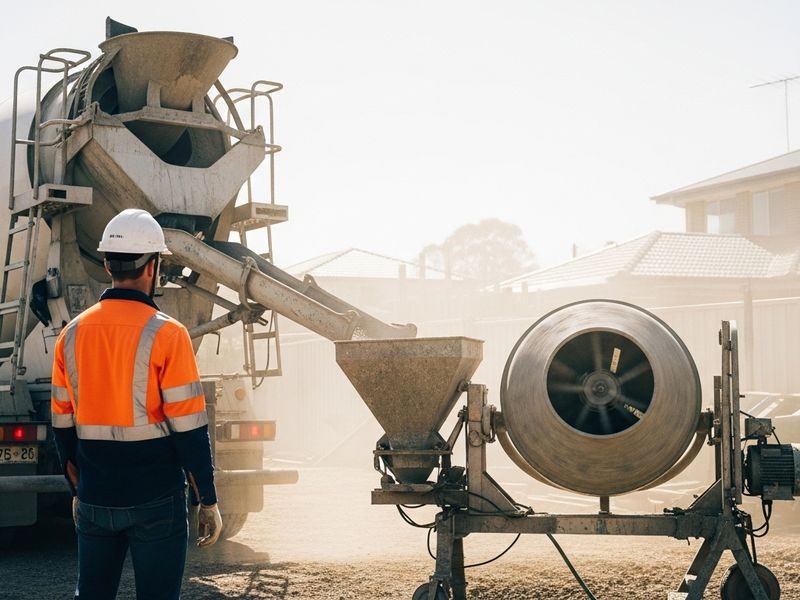
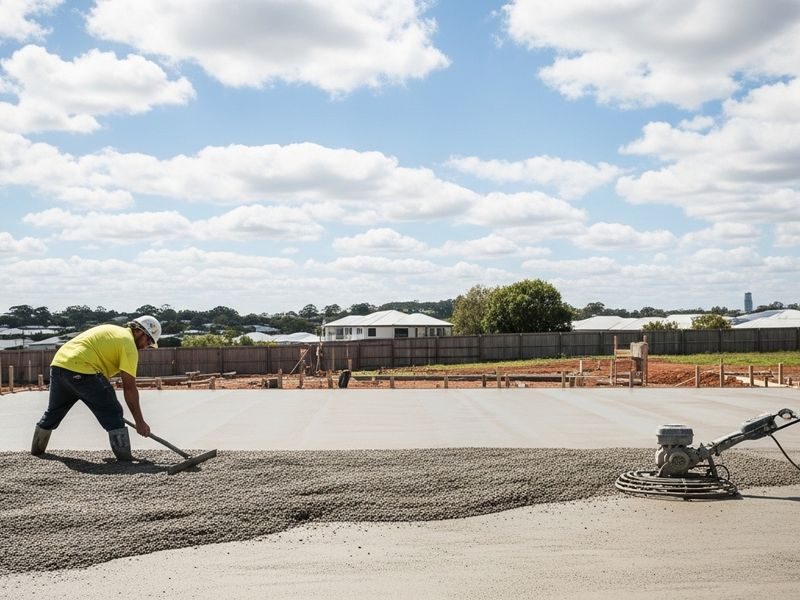
Common finishes include broom finish for non-slip texture, smooth trowel finish for interior floors, exposed aggregate for decorative appeal, and stamped concrete for patterns. Each finish offers different aesthetics and functional properties suitable for various applications in Brisbane. This faq details finish options.
While small, simple shed slabs might seem manageable, achieving a level, durable, and properly drained slab requires expertise. Professional installation ensures correct sub-base preparation, accurate formwork, and proper concrete compaction and curing. This avoids costly issues later. This faq recommends professional help.
A suspended slab is a concrete slab supported by beams or columns, not directly by the ground. They are used for upper floors, balconies, and elevated alfresco areas, providing structural integrity and design flexibility in Brisbane.
Brisbane's subtropical climate with high humidity and intense UV exposure impacts concrete. Rapid drying during pouring can lead to surface cracks, while constant moisture can encourage efflorescence. Proper curing and sealing are essential to mitigate these effects.
Environmental considerations include responsible waste disposal, managing runoff to prevent sediment pollution, and minimising dust. Using sustainable concrete mixes or recycled aggregates can also reduce environmental impact. Compliance with local Brisbane environmental regulations is essential for all projects. This faq addresses environmental aspects.
We hope this FAQ addressed your questions about concreting services in Brisbane. Understanding these inquiries helps you prepare for your project and make informed decisions. For further questions or specific project details, please reach out to us.
HAVE A FAQ QUESTION? GET IN TOUCH TODAY
If your specific question wasn't covered in our comprehensive faq section, we invite you to contact us directly. Our team is ready to provide detailed answers and discuss your unique concreting needs in Brisbane. We aim to ensure you have all the information required before starting your project, adding to your faq knowledge.
To get started or to submit a specific faq, please use the contact form on our website. We offer free site visits and consultations to assess your requirements and provide tailored solutions. Complete the form to arrange a discussion about your concreting project, and one of our team will respond promptly.
